
Why does my dog hate having their harness put on?
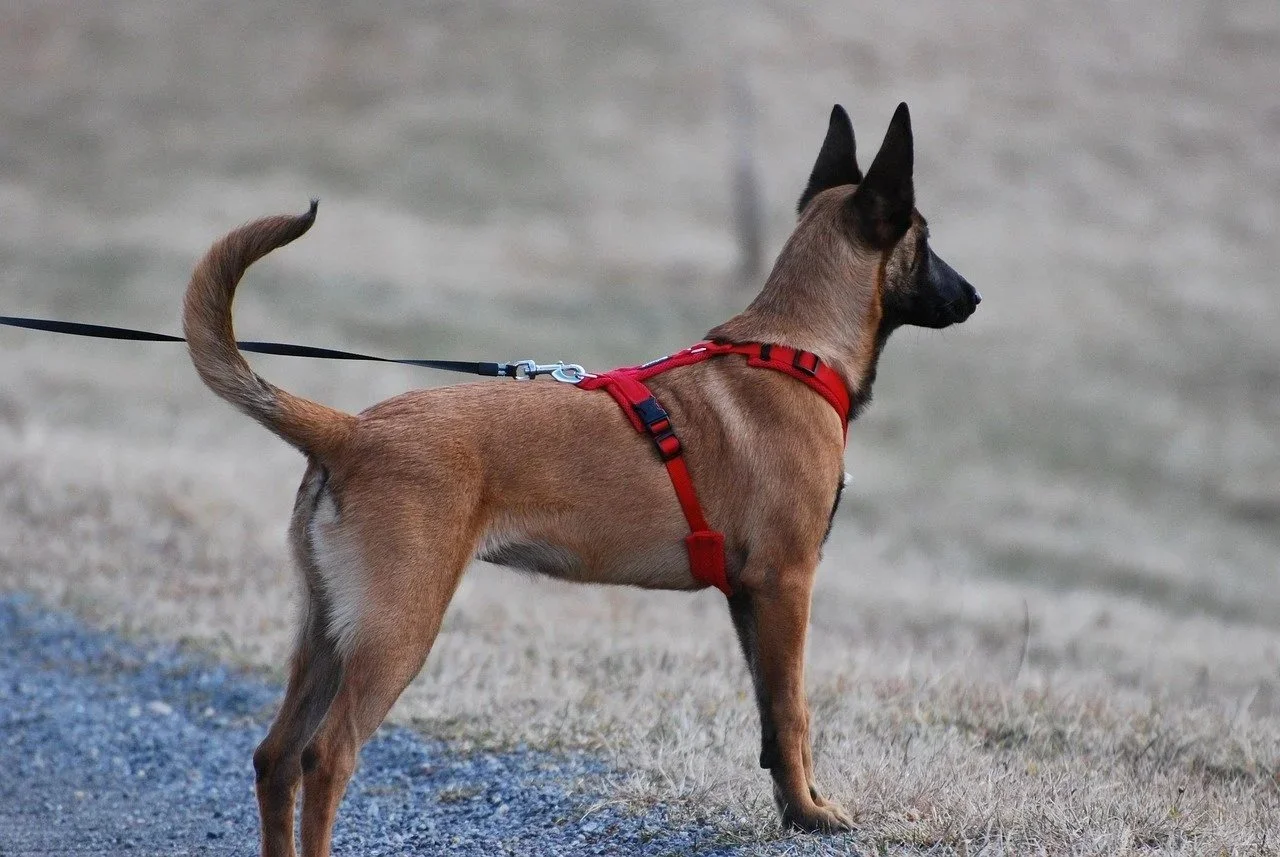
I’ve worked with a number of people who say, “My dog’s fine on the walk, they just hate the harness being put on.”
It’s a conundrum.
As the harness goes on, you see the dog “cringe”. They might dip their head, stiffen, lick their lips or turn their body.
Or perhaps ‘fool around mode’ has been activated. They get silly or fidgety. You could be forgiven for thinking it looks like impatience. “Come on! Let’s get on with the walk already!” But sometimes it’s actually a strategy to avoid having the harness put on.
Whichever form of communication your dog chooses, if it’s been going on for a while and the dog feels strongly that they’re not being heard, it may escalate to growling.
Firstly though, not every ‘cringe’ is a problem
An occasional reluctance isn’t automatically a red flag. Many harnesses go over a dog’s head, and it’s not unusual for dogs to hesitate about that. Not all dogs like having their head handled. In fact, many dogs don’t actively enjoy being touched on the top of their head, they simply tolerate it. So, it’s important to look at the bigger picture and see any patterns or changes, not one-off moments.
Why harnesses are different to collars
Unlike a collar, a harness sits over and around multiple areas of the body:
Shoulders
Upper spine
Chest
Ribcage
All of these areas move as your dog walks. Some harness designs allow freer movement than others, but any harness increases body contact compared to a collar. What’s more, if a dog is feeling stiff, sore, or uncomfortable in their body, the act of putting the harness on, such as touching paws, lifting legs, bending the neck, tightening straps around the chest, can feel more noticeable. It’s a bit like putting on a snug jacket when you’ve twinged your shoulder. You might still go out and do what you need to do, but you’re not thrilled about putting the jacket on.
“But once it’s on, they’re fine!”
Often, once the harness is on, they’re ready for action! It’s like the harness drama never happened.
How confusing, is that?
This is where understanding arousal helps. Once the harness is on, your dog knows it’s game on and a walk is happening. Their brain is already: out the door, down the path, in the woods, following scents. Excitement and anticipation increase adrenaline and other feel-good chemicals. That heightened state can temporarily reduce how much attention they pay to how their body is feeling. So the discomfort may still be there, it’s just competing with a very motivating activity.
Build the bigger picture
On its own, harness reluctance can be easy to dismiss. But if you’re also seeing other small changes, it’s worth stepping back and looking at the whole dog.
For example:
Reluctance to jump into the car or onto furniture
Slower walks or tiring more easily
More reactive or sensitive behaviour than before
Changes in how they sit, lie down, or get up
Avoiding certain movements or surfaces
Increased sensitivity to being touched or groomed
When several small things show up together, they can point towards changes in comfort, mobility or overall wellbeing.
Of course, it’s not always physical, harnesses can carry emotional meaning too
For some dogs, the issue isn’t just about how the harness feels on their body, it’s about what the harness predicts. Dogs are experts at forming associations. If wearing a harness regularly leads to experiences they find stressful or overwhelming, the sight or feel of the harness can start to trigger emotional tension before the walk has even begun.
This might happen if your dog:
Feels worried on walks
Is often overwhelmed by busy environments
Struggles with other dogs, people or traffic
Has had frightening or painful experiences while out
Over time, the harness can become a signal that something difficult is about to happen. In these cases, the behaviour isn’t stubbornness or defiance. It’s anticipation of stress. And just like with physical discomfort, the outside world can still be exciting enough that once they’re out, adrenaline carries them through, even if they weren’t feeling great about it beforehand.
Physical and emotional often overlap
It’s also important to say that physical and emotional factors don’t sit in tidy little boxes. A dog who feels physically uncomfortable may feel more worried in the world. A dog who feels emotionally overwhelmed may be more sensitive to touch, or indeed, also have a physical concern.
That’s why it helps to look at the whole picture rather than assuming it’s only a training issue, only a behavioural challenge, or only a physical concern.
What you can do
Observe
Notice when the reluctance happens and what it looks like. Is it getting more frequent or intense?
Take the pressure off
Can you switch to a collar for the moment, or even try a different harness? Take your time and be gentle when handling them. Give them a choice, if at all possible, in how the harness is put on
Look at the whole dog
Are there other behaviour or movement changes happening at the same time?
Speak to your vet, a veterinary physiotherapist, or a suitably qualified professional who takes both physical comfort and emotional wellbeing into account
Share specific observations, especially if you’re seeing changes in movement, posture or behaviour.
Getting the right support early can make a big difference to your dog’s comfort and confidence.