
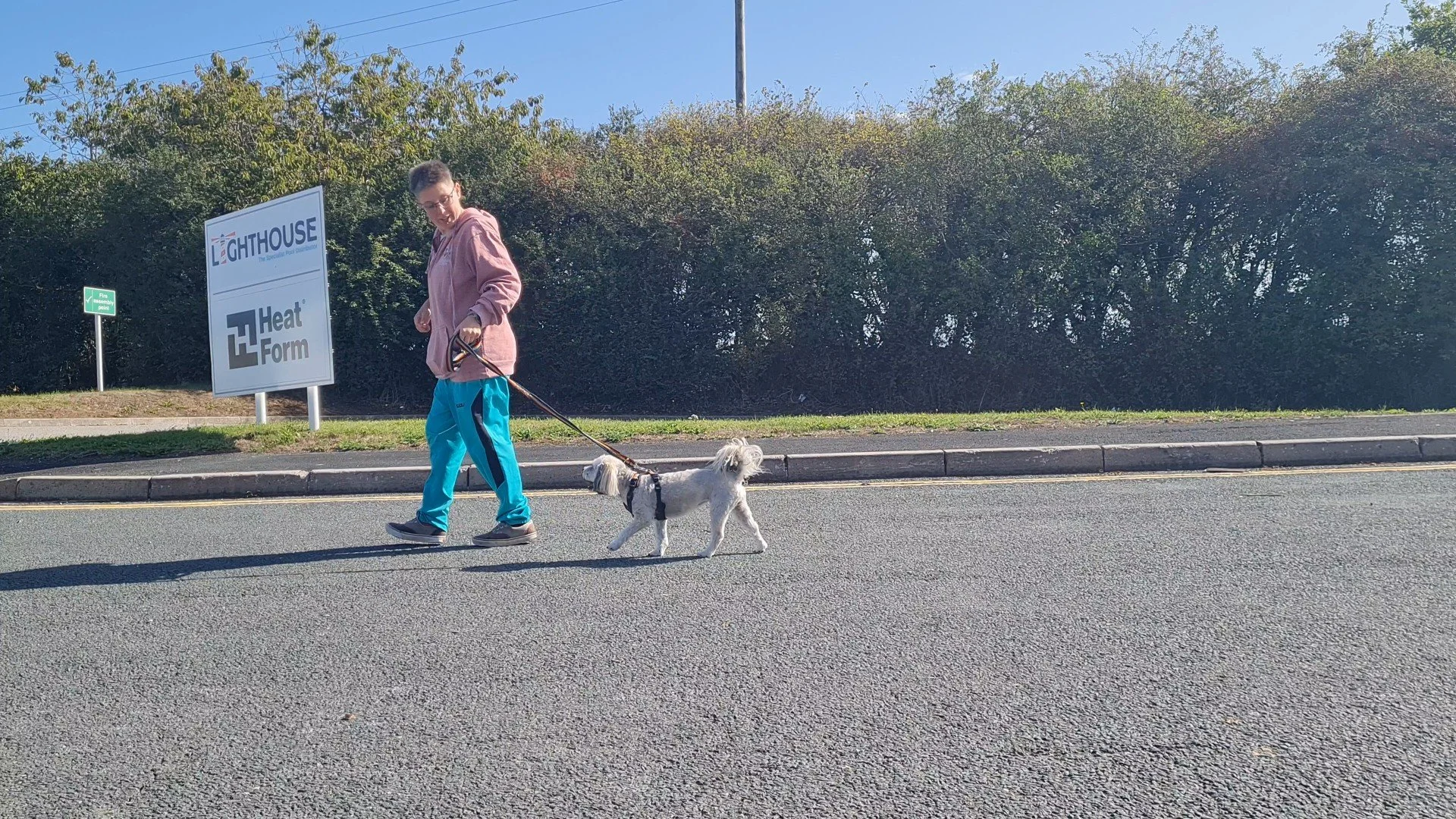
Movement & Posture Assessment for Dogs
Stop guessing whether it's "just behaviour." Get clarity on what's really going on, and a clear next step.
Many dogs show subtle signs of discomfort or compensation long before obvious pain becomes apparent. A change in posture, a shortened stride, or an uneven weight shift can affect not just movement, but behaviour and wellbeing too. And without a clear picture, it's easy to spend months training or managing something your dog can't simply "behave" their way out of.
A Movement & Posture Assessment gives you that picture: what's happening physically, what it might mean, and exactly what to do next.
Struggling with behaviour that doesn't quite add up?
Resource guarding that came out of nowhere. Reactivity on the lead that's got worse, not better. Sudden sensitivity around being handled, groomed, or having paws touched. Separation-related distress that training alone hasn't shifted. A new reluctance to jump, use stairs, or be picked up.
These are usually treated as "just behaviour" and something to be modified. But discomfort and pain can sit underneath behaviour like this, and often go unrecognised because there's no obvious limp, no vet finding, nothing dramatic to point to.
This assessment looks at how your dog actually moves, to help identify whether physical discomfort could be part of the picture. It won't replace a vet diagnosis, but it can give you, your vet, or your behaviourist a clearer, more complete starting point than behaviour alone.
Not sure what to look for? Read Is my dog sore? for the subtle signs that are easy to miss.
Why book an assessment for your dog?
This service can be especially valuable if :
✅ Your dog shows occasional lameness, stiffness, or reluctance to exercise
✅ Your dog shows behaviour changes such as resource guarding, reactivity, handling sensitivity, or separation-related distress that hasn't responded to training alone
✅ Your dog competes in sports or works actively and you’d like to spot issues early
✅ Your dog is getting older and needs help staying comfortable and mobile
✅ You want a structured overview to support conversations with your vet
Behaviour and movement are rarely separate stories. By identifying physical patterns early, you can make more informed choices about training, exercise, and veterinary care, rather than addressing behaviour in isolation
What’s included?
✔️A Zoom or phone consultation where we deep dive into your dog's history, activities, behaviour, and any concerns
✔️ Guided video submission; I'll tell you exactly what clips to film (walking, standing, sit-to-stand, down-to-stand) so nothing important gets missed
✔️ If you're local to Plymouth, filming can be done in person at a mutually agreed outdoor location, subject to weather and daylight
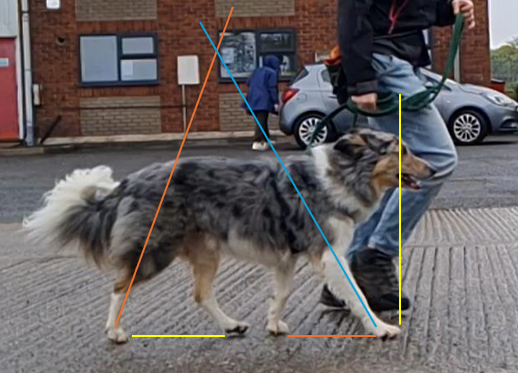
✔️Slow motion video analysis of gait
✔️ Detailed static posture assessment
✔️ Transitions (sit-to-stand, down-to-stand)
✔️Written summary report within 72 hours and access to a folder you can share with your vet containing relevant videos and photos
✔️Practical recommendations (if appropriate)
Cost – £175
“Tracy is an excellent trainer, with wide knowledge and expertise. She explains why Shadow exhibits some of his negative behaviours and how we can gently work to change these. She trains me, how to train him. I would highly recommend her.
We initially signed up for four sessions, but I have signed up for four more and look forward to her working with Shadow, who is responding well.”
What happens next?
Your assessment isn't the end point; it's the starting point for the right next step, whatever that turns out to be.
Most reports lead to one of the following:
Guidance you can act on straight away; for many dogs, the assessment itself gives you what you need: a clear picture of what's going on and practical adjustments to make, with nothing further required
A vet referral, if what I see suggests something needs medical investigation before anything else happens
The Whole Dog Programme, if behaviour and physical wellbeing are tangled together and need a fuller, combined look
You'll know exactly which of these applies to your dog.
If you go on to book the Whole Dog Programme, your £175 assessment fee is credited toward the cost.
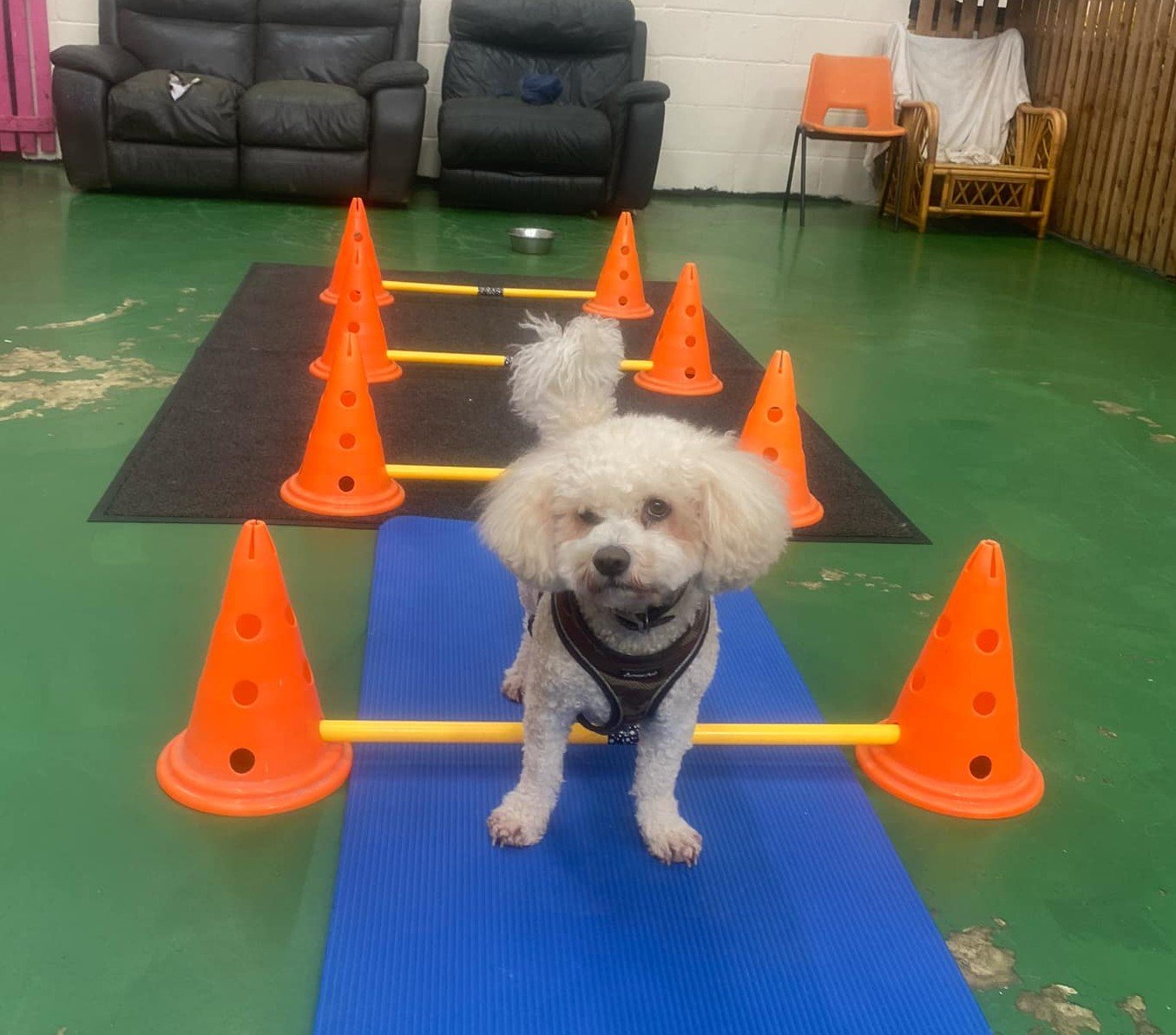
“Marley and I attended this [Active Ageing] workshop today. Marley is 11 years old and doing great. I wanted to learn more about how I can help Marley as he gets older. I just lost a 16 year old cockerpoo ❤️🐾❤️ and really want to learn how I can help my Marley as best as I can. Tracey was amazing. Her knowledge is immense and Marley had such a great time. He’s clueless that he’s moving into the older gent zone and approached every activity with enthusiasm. The workshop made me think about how much we don’t know and how much more we can do for our dogs… without huge expense, just knowledge. Thanks so much for this workshop. I’m looking forward to attending more. Marley’s health and well being is my priority. Thanks for sharing your knowledge 🙏”
Working alongside your vet
This assessment does not diagnose injury or disease.
If I observe patterns that may indicate discomfort or underlying pathology, I will advise veterinary assessment before any conditioning programme begins.
FAQs
-
It’s a structured consultation to observe how your dog moves, stands, sits, and lies down. By assessing gait and posture, I can identify patterns of compensation, stiffness, or discomfort that may be affecting mobility, behaviour, or overall wellbeing.
-
If your dog is slowing down, showing subtle changes in movement, seems reluctant to exercise, or displays behaviour changes like irritability or reactivity, an assessment can help clarify what’s happening. Even if you haven’t noticed anything obvious, this service is useful for proactive checks, especially in senior dogs, active dogs, and those with a history of injury.
-
No. My assessments are non-diagnostic and do not replace veterinary care or physiotherapy. If I see signs that require further investigation, I will always recommend you consult your vet. My role is to help you gather information and support your dog’s comfort alongside your veterinary team.
-
I'll ask about your dog's history and any concerns you have on a video call. You'll then film your dog walking, trotting, and changing position at home, following my guidance, and share the clips for review. Afterwards, you'll receive a written summary with observations and next-step recommendations.
-
If you're local to Plymouth, yes, I can film the required footage with you in person at a mutually agreed outdoor location, at no extra charge. This is a video-based assessment either way, so filming in person simply means I capture the footage rather than you, which can also mean cleaner, more usable footage. Sessions are subject to daylight and weather, so may need to be rescheduled if conditions aren't suitable on the day..
-
No handling takes place. This is a fully video-based assessment, so your dog stays completely in their own space throughout. This also means there's no travel, no unfamiliar environment, and no stranger in the room to affect how your dog moves or behaves.
-
Yes. Many dogs compensate subtly for discomfort long before they limp. Early assessment can help you adjust exercise, prevent injury, or understand behaviour changes before they escalate.
-
Yes. Your written report includes specific next steps for your dog; practical adjustments you can start immediately, and a clear recommendation on whether further professional input (your vet, or a combined behaviour-and-movement programme) would help. You won't be left with just an observation; you'll be left with a plan.
-
If I observe anything suggesting pain, injury, or a medical issue, I’ll recommend that you contact your vet for further assessment. With your consent, I can also provide a summary report to share with your veterinary team.
Many behaviour changes in dogs can be linked to underlying discomfort, posture changes or early musculoskeletal strain. A structured movement assessment can help identify patterns that may warrant veterinary review, giving you clarity and confidence about your next steps.