
Walking is only part of the picture: Helping your dog stay strong as they age
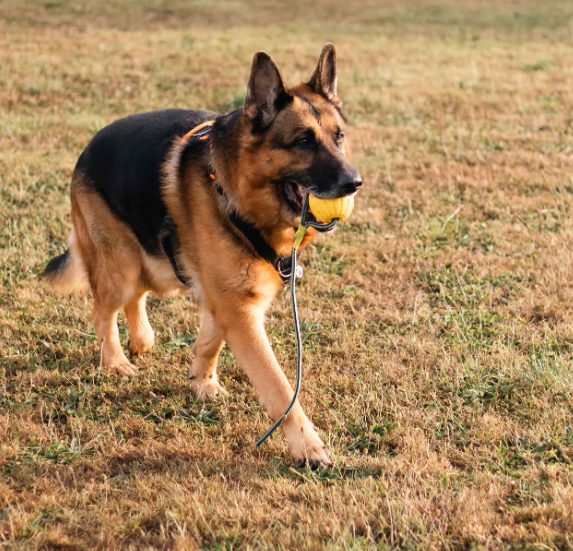
If you've got an older dog, chances are you're already doing everything you can to help them age well. Perhaps you've switched to a senior diet, started a joint supplement, put more rugs down, bought an orthopaedic bed or taught them to use a ramp. Maybe you've shortened their walks or chosen flatter routes to make life a little easier.
These are all great changes, and they can make a real difference. But they're largely things that support your dog's environment, making everyday life easier, safer and more comfortable.
Targeted movement is different. It helps support your dog's body.
By maintaining strength, balance, coordination and confidence, we can help dogs stay capable of doing the things they love for longer.
And that's the piece of healthy ageing that often gets overlooked.
Walking is great, but it has its limits
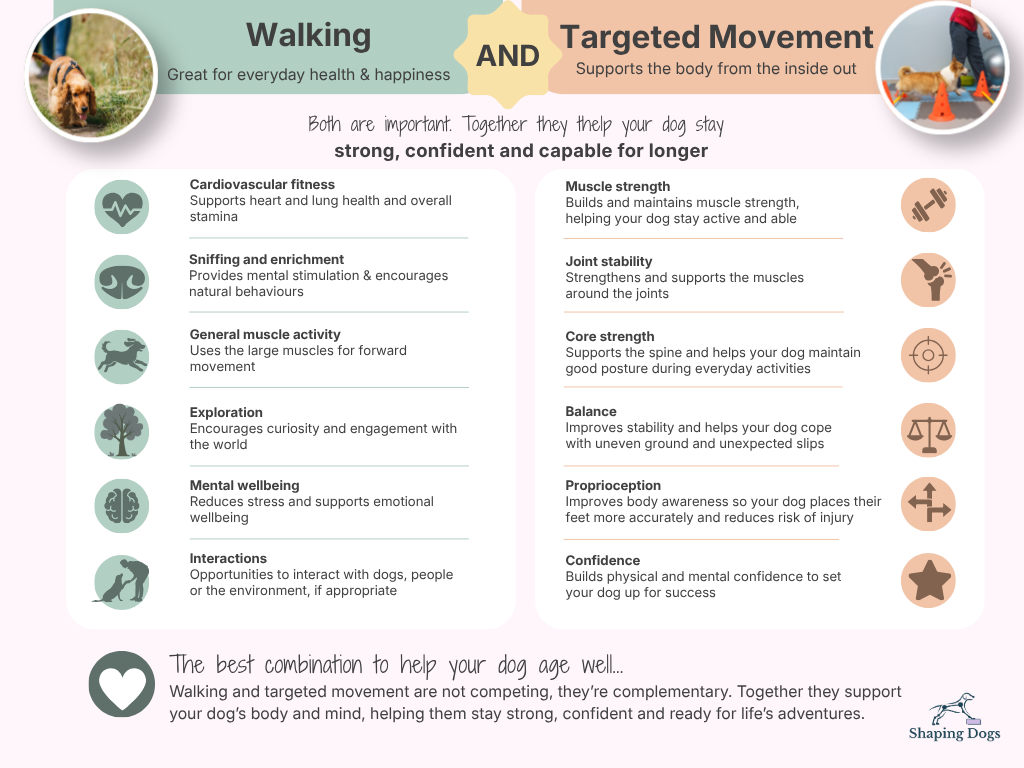
Before I go any further, I just want to clarify, walking your dog is awesome. Regular walks help maintain cardiovascular fitness, provide valuable mental stimulation, encourage natural behaviours like sniffing and exploring, and help keep muscles active.
But not all muscles have the same job.
Some muscles create movement, while others act more like the body's support team. These smaller, deeper muscles help stabilise the shoulders, hips and spine, support posture, maintain balance and keep joints moving efficiently.
During a typical walk, your dog spends most of their time moving forwards in a straight line at a comfortable pace. While this absolutely uses their muscles, it doesn't place a great deal of challenge on the deep stabilising muscles, balance or body awareness (known as proprioception) in the way that carefully chosen conditioning exercises can.
Think about your own fitness.
Walking is fantastic for your general health, but if you wanted to improve your balance, maintain your strength or reduce your risk of injury as you got older, you probably wouldn't rely on walking alone. You might include some strength training or Pilates too.
The same principle applies to our dogs.
Ageing isn't just about joints
When people think about older dogs, arthritis is usually the first thing that comes to mind, but ageing affects far more than the joints.
As dogs get older, they naturally lose muscle mass and strength. Their balance can change, their coordination may become less precise, and they may become less aware of where their limbs are in space. Over time, these small changes can make everyday activities feel more difficult, even if your dog still happily heads out for a walk.
You might notice:
taking longer to stand up
slipping occasionally
hesitating before jumping
struggling on stairs
becoming less steady on uneven ground
seeming less confident than they once were.
If these changes are new or worsening, it's always sensible to speak to your vet. They may also be signs that your dog's body would benefit from exercises designed to maintain strength, balance and coordination.
Looking beyond the obvious
One of the things I often hear is:
"Ah, he’s just getting older."
And sometimes that's true. Ageing brings natural changes, and there's nothing wrong with that. But rather than assuming every change is simply "old age", I encourage people to become curious.
What has actually changed?
Has your dog's posture altered?
Are they standing differently?
Do they shift their weight more than they used to?
Have they stopped sitting squarely?
Do they hesitate before jumping into the car when they never used to?
Do they seem less confident on uneven ground?
None of these things automatically mean something is wrong. Equally, they shouldn't always be dismissed as "just getting older." Sometimes they're simply your dog's way of telling us their body is changing. The challenge is that these changes often happen so gradually that they're incredibly difficult to spot when you see your dog every day. It's a bit like watching a child grow. You don't notice the change from one day to the next, but compare a photograph from six months ago and it's suddenly obvious how much they've grown.
Our dogs are often the same.
One simple habit I encourage owners to develop is taking a few standing photographs every six months, from the side, the front and behind, ideally with your dog standing naturally on a flat surface. Looking back at those photographs can sometimes reveal subtle changes in posture, muscle condition or weight distribution that are easy to miss in day-to-day life.
And then the sooner we notice change, the sooner we can ask questions.
One of the things I love about performing movement assessments is exactly that. They allow us to explore what's going on under the fluff and build a clearer picture of how your dog is moving today.
Strength isn't about building bigger muscles
Now, just to be clear, when people hear "strength training", they often imagine gym workouts. That's not what Active Ageing is about. It's about helping dogs move better.
Appropriate exercises can help improve:
Joint stability
Core strength
Balance
Proprioception (body awareness)
Confidence
Functional strength for everyday life.
Healthy muscles don't just create movement. They also help absorb forces as your dog walks, turns and changes direction, reducing the demands placed on joints and other tissues.
The result is a stronger dog who moves with greater confidence, feels more secure on their feet and is better equipped to enjoy everyday life.
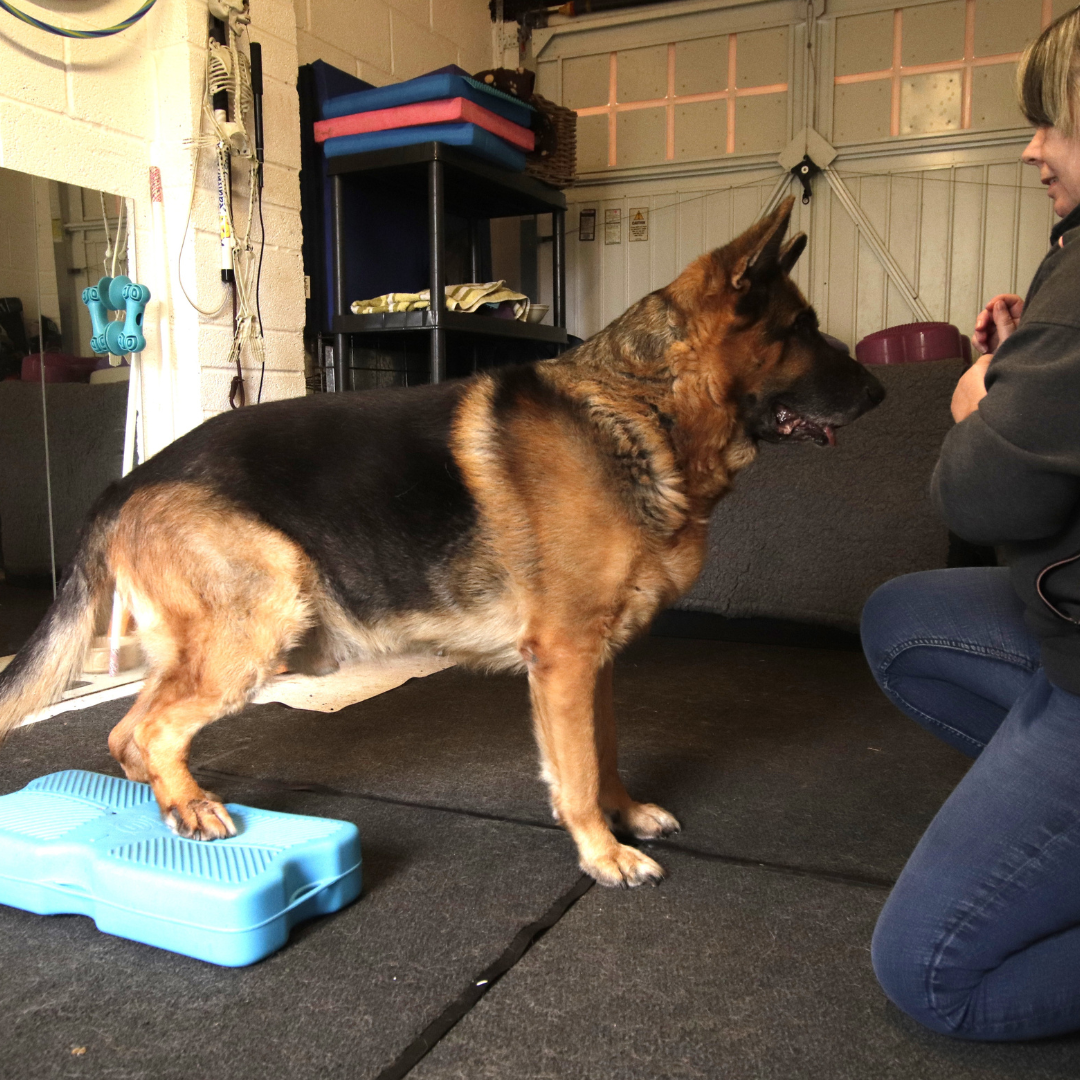
Djambo practising a simple rear-foot targeting exercise. Small, carefully chosen exercises like this gently challenge strength, balance and body awareness, helping support confident movement alongside his daily walks.
Small amounts done regularly make the biggest difference
One of the biggest misconceptions about canine conditioning is that it requires specialist equipment or lengthy sessions. In reality, many exercises take just a few minutes.
Think of them as exercise snacks. Small amounts, done consistently, often make the biggest difference because rather than making dogs work harder, we want to help them move better.
Could your dog benefit from Active Ageing?
Every dog ages differently. If your dog is entering their senior years, or you've simply noticed that something feels a little different, an Active Ageing Assessment can provide a detailed picture of how they're moving.
Together, we'll look at posture, movement, balance and strength before creating a programme that's tailored specifically to your dog, to help them stay active, capable and confident for as long as possible.