
The connection between how your dog moves and how they feel
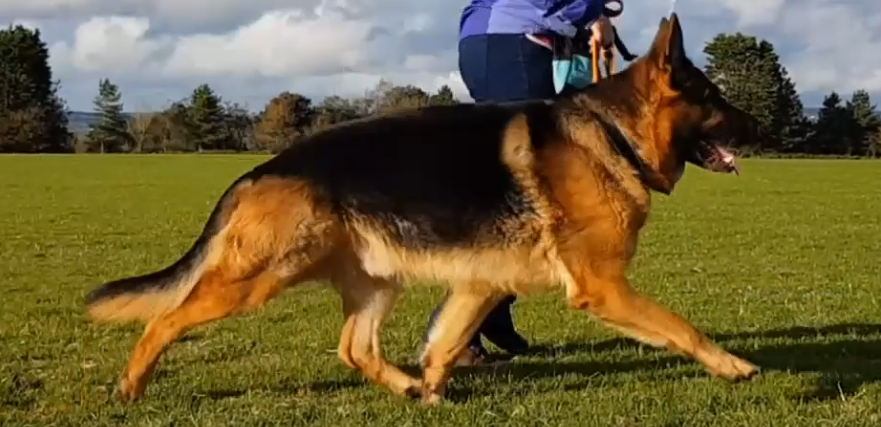
Quality movement isn't just about physical health, it's the foundation of how your dog experiences the world
Most of us think about our dog's movement in fairly simple terms. Are they limping? Are they stiff after a walk? Do they struggle to get up in the morning? If the answer is no, we tend to assume all is well.
But movement is far more than a measure of physical function. The quality and fluidity of your dog’s movement has a significant impact on how they feel emotionally. And understanding that connection can change how we support our dogs.
The body talks to the brain
The relationship between physical movement and emotional state isn't one-directional. We tend to think of the brain as sending instructions to the body, telling it when to stop or go. But the body is constantly sending information back. Every movement your dog makes generates sensory data that travels directly to the brain and shapes how your dog experiences the world.
This process is called proprioception: the body's ability to sense its own position, movement and balance in space. Proprioceptive signals travel through the nervous system continuously, giving the brain a real-time map of where the body is and how it's moving. When proprioceptive input is clear and consistent, the central nervous system can accurately predict and prepare for movement, supporting a baseline sense of physical ease. When that input is disrupted by pain, stiffness, compensation or restricted movement, the brain receives conflicting signals, increases its processing load, and shifts toward a state of heightened physiological alertness.
Think of it this way: a dog who moves freely and comfortably through the world is a dog whose nervous system is receiving largely positive, predictable feedback. A dog who is compensating for discomfort, however subtly, is a dog whose nervous system is working harder and carrying a background level of physical stress that never fully switches off.
Research published in Frontiers in Veterinary Science (2025) confirms that postural stability in dogs relies on a complex interplay between the central and peripheral nervous systems, musculoskeletal structures and sensory inputs, and that proprioceptive training programmes can meaningfully improve stability, particularly under biomechanically challenging conditions.¹
Pain, movement and behaviour
One of the most under recognised connections in dog behaviour is the relationship between physical discomfort and emotional reactivity. A dog who is sore or who is restricted in their movement is a dog whose entire experience of the world is filtered through that discomfort.
Pain and restricted movement activate the sympathetic nervous system i.e., the body's threat response. Even low-level, chronic discomfort can keep a dog in a state of mild but persistent arousal, making them more reactive to stimuli they might otherwise manage comfortably.
This is not a theoretical connection. A landmark study by Mills et al. (2020) found that pain was a contributing factor in a significant proportion of cases referred to veterinary behaviourists, with estimates ranging from 30 to 80%.² Research has also found that behavioural changes such as increased fearfulness, prolonged recovery from stressful events and reduced interest in social interactions may actually appear before the more obvious physical signs of musculoskeletal discomfort, meaning that in many dogs, the behaviour is the first signal of a physical problem the owner hasn't yet noticed.³
The vagus nerve, the bridge between body and calm
There is a third piece of this picture that is less well known but equally important: the vagus nerve.
The vagus nerve is the longest nerve in the body, running from the brainstem through the heart, lungs and digestive system. It is the primary pathway of the parasympathetic nervous system, which is the system responsible for rest, recovery and calm. And it is very much influenced by rhythmic, fluid movement. Indeed, comfortable movement without restriction appears to support vagal tone. In simple terms, it may activate the body's own calming system. In human research, gentle sustained rhythmic movement has been associated with engagement of the ventral vagal circuit and support for emotional processing, with the key factor being rhythm and regulation rather than intensity.⁴
It is therefore possible that a dog whose movement is restricted or painful loses access to some of that natural regulation. The body is too busy managing physical stress to switch fully into rest and recovery mode. Over time, this can contribute to a dog who finds it harder to bounce back from stressful experiences.
A note on vagus nerve claims: The vagus nerve has attracted considerable attention on social media in recent years, particularly in relation to reactive dogs. It is worth saying that many of the specific claims made online go beyond what the current evidence supports. The foundational relationship between vagal tone and emotional regulation is established in human research, most notably through the work of Stephen Porges (1994), and cardiovascular fitness is associated with higher resting vagal tone, meaning a body that is better equipped at baseline to rest, recover and regulate its emotional state. However, the precise relationship between gentle movement and vagal activity during and after exercise remains an active area of research in human physiology, and its direct application to dogs is biologically plausible but not yet thoroughly studied in canine-specific literature. Where I refer to vagal tone in the context of canine movement, I am drawing on well-evidenced human physiology and applying it with caution.
What this means in practice
The implications of this are significant and they extend well beyond the dogs we might traditionally think of as needing physical support.
For puppies: The movement habits formed in early life shape proprioceptive awareness, physical confidence and nervous system development. A puppy who learns to move well, to use their body with balance and awareness, is building foundations that support both physical and emotional resilience for life.
For adult dogs: Subtle changes in movement quality such as a slight shortening of stride or a tendency to shift weight, can signal discomfort that hasn't yet become obvious lameness. Addressing these early, before compensation patterns become established, protects both physical health and emotional wellbeing.
For senior dogs: As dogs age, maintaining fluid, comfortable movement becomes one of the most powerful things we can do to support their quality of life, both physically and emotionally. A senior dog who can still move with ease is a senior dog who can still engage with the world around them.
For dogs with behaviour challenges: Where behaviour has changed, physical comfort should always be part of the picture. Movement assessment can sometimes reveal what a behaviour assessment cannot.
Movement as Wellbeing
At Shaping Dogs, this understanding sits at the heart of everything I do. Canine fitness is not about performance or athletic ability. It is about supporting dogs to move as comfortably, and as freely as possible, because when they do, everything else follows.
If you'd like to understand more about how your dog moves and what it might be telling you, a Movement and Posture Assessment is a good place to start.
👉 Book an assessment at shapingdogs.com
References
Frontiers in Veterinary Science (2025). Improving postural stability through proprioceptive training in dogs. https://www.frontiersin.org/journals/veterinary-science/articles/10.3389/fvets.2025.1645875/full
Mills, D.S. et al. (2020). Pain and Problem Behavior in Cats and Dogs. Animals, 10(2), 318. https://pmc.ncbi.nlm.nih.gov/articles/PMC7071134/
Demirtas, A. et al. (2023). Dog owners' recognition of pain-related behavioral changes in their dogs. Journal of Veterinary Behavior, 62, 39–46. https://www.sciencedirect.com/science/article/abs/pii/S1558787823000345
Porges, S.W., Doussard-Roosevelt, J.A. & Maiti, A.K. (1994). Vagal tone and the physiological regulation of emotion. Monographs of the Society for Research in Child Development, 59(2-3), 167-186. https://doi.org/10.1111/j.1540-5834.1994.tb01283.x
Tracey Jones-Hughes is a Canine Fitness Specialist based in Ivybridge, serving Plymouth and South Devon. She holds a Diploma in Canine Exercise Rehabilitation, a Certified Professional Canine Fitness Trainer qualification, and a CAM Level 2 in Canine Arthritis Management.