
Why keeping your puppy lean matters more than you think
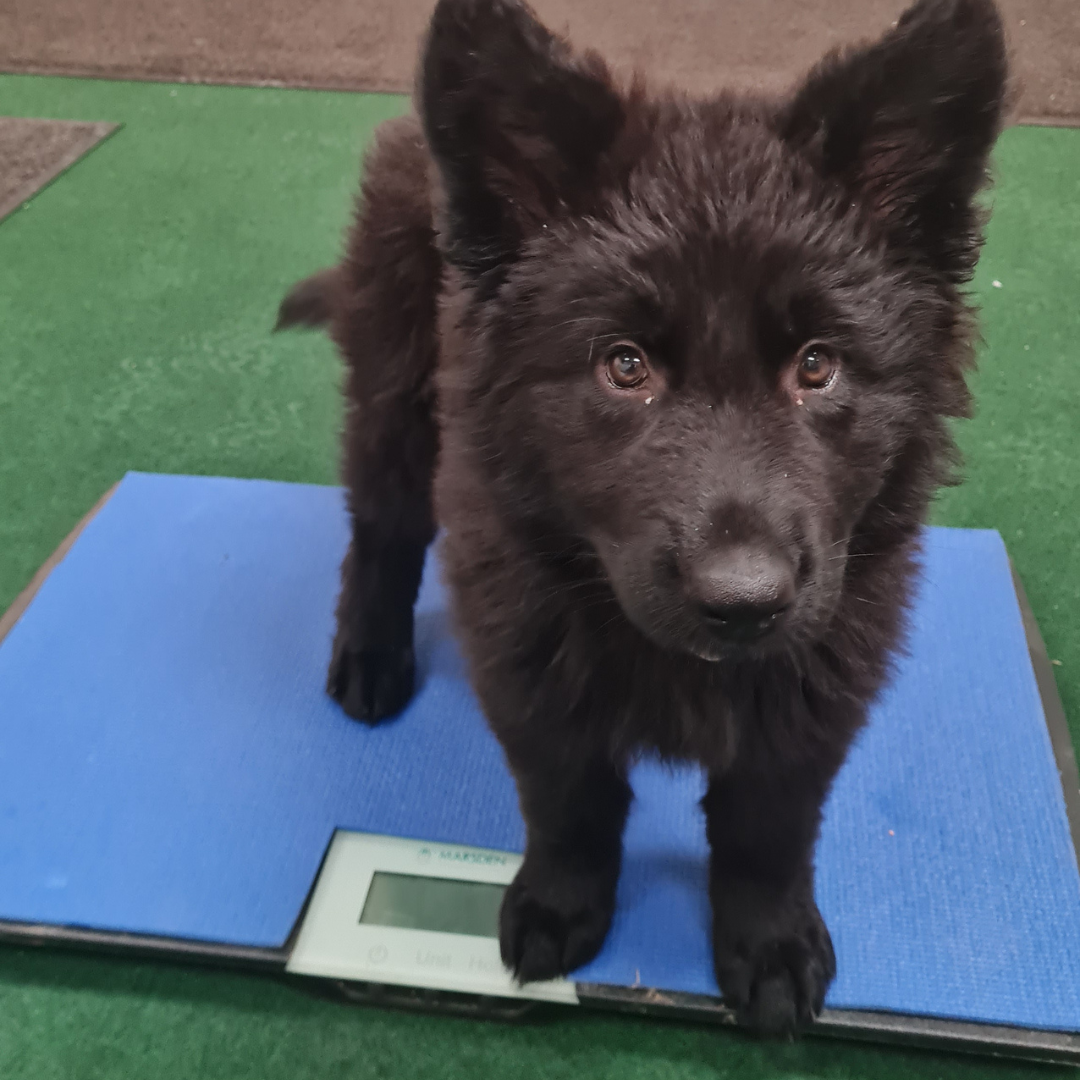
Ziva, our German Shepherd pup, getting her regular weigh-in
With all that fluff, the number on the scale only tells half the story, we rely just as much on how she feels under our hands as how much she weighs.
I love a chubby puppy as much as the next person, but here’s the thing. While round bellies and pudgy paws look adorable, for growing dogs ( especially large and giant breeds), carrying extra weight during puppyhood can set the stage for problems that last a lifetime.
Why lean beats chubby
Puppies aren't just small adult dogs. Their skeletons, joints, and growth plates are still forming, and that process is very sensitive to how much weight those developing structures have to carry.
A few reasons lean wins:
Joint development. Extra body weight puts additional mechanical stress on immature hips, elbows, and knees. Research has consistently linked overweight puppyhood to higher rates of hip dysplasia and other developmental orthopaedic disease, particularly in large breeds.
Growth rate. Puppies that are allowed to grow quickly, which often goes hand-in-hand with being overfed, are more prone to skeletal abnormalities than puppies who grow at a slower, steadier pace.
Lifelong habits. Fat cell number is partly established in early life. Puppies that become overweight are more likely to struggle with weight as adults.
Long-term joint health. Dogs that stay lean throughout puppyhood and into adulthood tend to show osteoarthritis later and live longer than their overweight littermates, according to long-term studies in Labrador Retrievers.
We’re not looking for a ‘skinny’ puppy. The goal is a lean pup with a visible waist, easily felt ribs, and steady, moderate growth.
The calcium:phosphorus ratio (especially for large breed pups!)
The calcium:phosphorus ratio is one of the most important, least talked-about parts of puppy nutrition, particularly for large and giant breeds.
Why it matters: Calcium and phosphorus work together to build bone, but unlike adults, young puppies can't tightly regulate how much dietary calcium they absorb. Feed too much, and the excess doesn't just get excreted; it can disrupt normal bone remodeling and contribute to conditions like osteochondrosis, hip dysplasia, and retained cartilage cores. Feed too little relative to phosphorus, and you risk the opposite problem: weakened skeletal structure from secondary hyperparathyroidism.
The target range: Veterinary nutritionists and AAFCO guidelines generally agree the ideal dietary calcium:phosphorus ratio for growing puppies sits between roughly 1.1:1 and 1.4:1, with AAFCO's broader acceptable window being 1:1 to 2:1. For large breed puppies specifically (dogs expected to reach 32+ kg as adults), AAFCO also caps total calcium at 1.8% on a dry matter basis, precisely because these breeds are most vulnerable to the effects of excess.
What this means in practice:
Check the calcium:phosphorous ratio in the ingredients, especially if you have a large breed puppy
Depending on your feeding preference, food specifically for large breed puppies are available, which are built around the tighter mineral targets large breeds need.
Never add supplemental calcium (including calcium-rich table scraps like dairy, or general multivitamins) to a complete and balanced commercial diet. This is a common mistake well-meaning owners make.
Check with a veterinary nutritionist if you’re feeding a home-made diet
How to body condition score a puppy
Body Condition Score (BCS) is the hands-on way to check whether your puppy is lean. Most vets use a 9-point scale (1 = emaciated, 9 = severely obese), with 4–5 as the ideal target.
Here's how to check, using three simple hands-on tests:
Ribs. Run your hands gently along your puppy's sides. You should be able to feel each rib easily under a thin layer of fat, without pressing hard, but they shouldn't be visibly sticking out.
Waist. Look down at your puppy from above. There should be a visible "waist" — a narrowing behind the ribs before the hips flare out again. From the side, the belly should tuck upward behind the ribcage rather than hanging flat or sagging.
Hip bones and spine. Feel along the spine and hip bones. They should be easy to feel but not prominent or sharp.
Quick reference:
Too thin (BCS 1–3): Ribs, spine, and hip bones are visible from a distance; minimal to no fat cover; obvious waist and abdominal tuck, often exaggerated.
Ideal (BCS 4–5): Ribs easily felt with slight fat covering; visible waist from above; abdominal tuck when viewed from the side.
Overweight (BCS 6–7): Ribs felt only with firm pressure, or difficult to feel at all; waist barely visible or absent; little to no abdominal tuck.
Obese (BCS 8–9): Ribs not felt under a heavy fat layer; no waist; fat deposits over the spine and the base of the tail; belly may hang down.
For heavily coated breeds, all that fluff can hide a lot! A puppy can look perfectly proportioned and still be carrying extra weight underneath, or look a bit chunky when they're actually spot on. Hands-on feel will always tell you more than eyes alone.
Because puppies grow quickly, it's worth doing a hands-on BCS check every couple of weeks rather than relying on the scale alone. Growth curves matter too. Your vet can plot your puppy's weight against breed-appropriate growth charts to catch a too-fast growth spurt early, which is often the first sign that portions need adjusting.
This post is for general information and isn't a substitute for individualised veterinary advice. Always check in with your vet about your own puppy's growth, diet, and body condition, especially for large or giant breeds.
References
Association of American Feed Control Officials (AAFCO). Dog Food Nutrient Profiles.aafco.org
VCA Animal Hospitals. "Nutritional Considerations for Large and Giant Breed Dogs." vcahospitals.com
Whole Dog Journal. "Finding The Best Large-Breed Puppy Food." whole-dog-journal.com