
Reactive dog? Why training alone isn't always enough
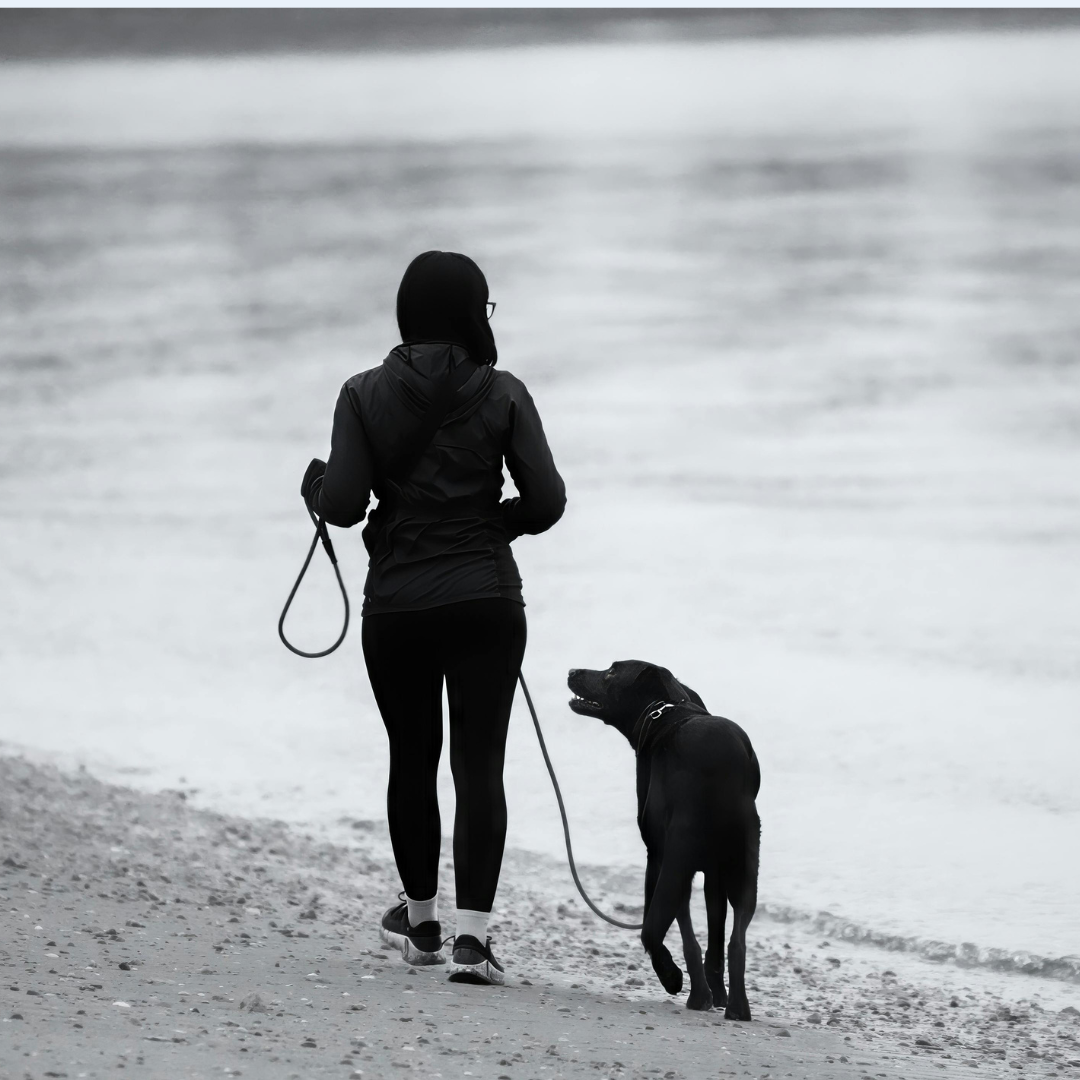
Sometimes the kindest thing you can do is give your dog space.
You see another dog at the end of the street and your stomach drops. You shorten the lead, cross the road, and hope your dog hasn't spotted it yet. Then the barking and lunging start, and you feel every pair of eyes on you.
If that sounds familiar, you're not alone. Reactivity is one of the most common reasons owners look for help, and one of the most exhausting to live with. Many people have already tried classes, online videos or a trainer, and they still feel stuck.
In this post, I'll explain what reactivity really is, why training alone doesn't always solve it, and what else might be going on for your dog.
What reactivity really is
Reactivity is a strong emotional response to something in your dog's world. Your dog isn't being disobedient, or stubborn, and they’re not trying to be "dominant". It's a dog who feels they can't cope with what's in front of them.
Common triggers include:
other dogs
people, especially strangers or children
traffic, bikes or joggers
sudden noises
Reactivity can look like barking, lunging, growling, spinning or pulling on the lead. Some dogs freeze or try to flee instead. Most reactivity is driven by fear, frustration or feeling overwhelmed, and those feelings are very real for your dog.
Why training alone doesn't always stick
Good, kind training can make a real difference to reactive dogs. Teaching your dog to look at you, building distance from triggers and rewarding calm choices all help. So if you've worked hard and your dog is still struggling, it doesn't mean you've failed.
It may mean training is working on the response, not the cause. Training teaches a dog what to do when they feel worried. But if something is making them feel worried, or uncomfortable in the first place, that feeling keeps pulling them back.
This is also why harsh corrections can seem to "work" for a while. Punishing a dog for barking may stop the bark, but it doesn't change how they feel. Often the fear grows, and the warning signs simply disappear.
Looking at the bigger picture
Behaviour rarely exists in isolation. How a dog feels physically, how much stress they're carrying and what their daily life is like all affect how well they cope.
I learned this the hard way. My German Shepherd, Djambo, began barking and reacting to other dogs and people. I assumed it was a training issue, and I spent money on advice that didn't help. It turned out he was living with pain in both shoulders.
Once his discomfort was treated, and I understood what was driving his behaviour, things became easier. He wasn't being "naughty". He was a dog who hurt, and who didn't want anything to come near him.
That experience is why I went on to study behaviour, movement and chronic pain, and why I now look at the whole dog with every client.
Pain doesn't always look like pain, either. It can show up as restlessness, clinginess, hiding, sensitivity to noise or touch, or a dog who seems on edge. In other words, it can look a lot like anxiety, and a dog can have both at once. If your dog has been described as "just anxious", it's worth asking your vet whether discomfort could be playing a part, especially if the worry appeared or got worse alongside other changes. (I'll be exploring this in more depth in a future post.)
Pain is just one piece. Poor sleep, a busy household, too little rest between walks or a recent upset can all fill a dog's "stress bucket". When the bucket is already full, it takes very little to tip them over.
Signs that something more might be going on
These don't mean your dog is definitely in pain or unwell. But if several sound familiar, it's worth looking further than training:
the reactivity started suddenly, or got worse without an obvious reason
your dog is more reactive later in a walk, or on certain days
they react more when another dog comes close to or bumps into them
they're reluctant on stairs, jumping into the car or getting up after rest
they've become less playful, or more grumpy when touched or groomed
they sit, lie down or move a little differently from how they used to
training helped for a while, then progress stalled
Dogs are very good at hiding discomfort. Often, a change in behaviour is the first clue that something isn't quite right.
What helps
Start with your vet. If your dog's behaviour has changed, or you've noticed any of the signs above, a vet check is always the first step. Mention the behaviour changes, not just the physical ones.
Give your dog space. Walk at quieter times or in quieter places while you work out what's going on. Every reaction you prevent is one less rehearsal of the fear.
Lower the overall stress. Good-quality rest, sniffing, calm enrichment and predictable routines help empty that stress bucket.
Stick with kind methods. Your dog needs to feel safe to learn. Harsh corrections add to the fear rather than resolving it.
Look at the whole dog. Ask how your dog moves, rests and copes day to day, not just how they behave on walks.
Most of all, go easy on yourself. Reactivity isn't a sign that you've done something wrong. It's a sign your dog needs a little more understanding, and you're already giving that by reading this.
When you need more support
If you've tried training and your dog is still struggling, it may be time to look at the whole picture. My Whole Dog Programme is a 12-week programme that brings together behaviour, movement, physical comfort and emotional wellbeing. Together, we'll work out what's really driving your dog's reactivity and build a kind, practical plan that fits your life.