

Arthritis Support for Dogs
in Plymouth
Helping dogs with osteoarthritis stay comfortable and strong through structured conditioning and lifestyle support
If your dog has been diagnosed with osteoarthritis, it can feel overwhelming to know how much exercise is helpful and how much may be too much.
Arthritis is a long-term condition that often requires ongoing management rather than short-term treatment. Alongside veterinary care, many dogs benefit from carefully structured strengthening, movement support and simple environmental adjustments that make daily life easier.
My role is to support owners in implementing practical strategies that help dogs maintain mobility, confidence and quality of life.
How I support dogs with arthritis
Sessions focus on helping dogs move comfortably and maintain strength through:
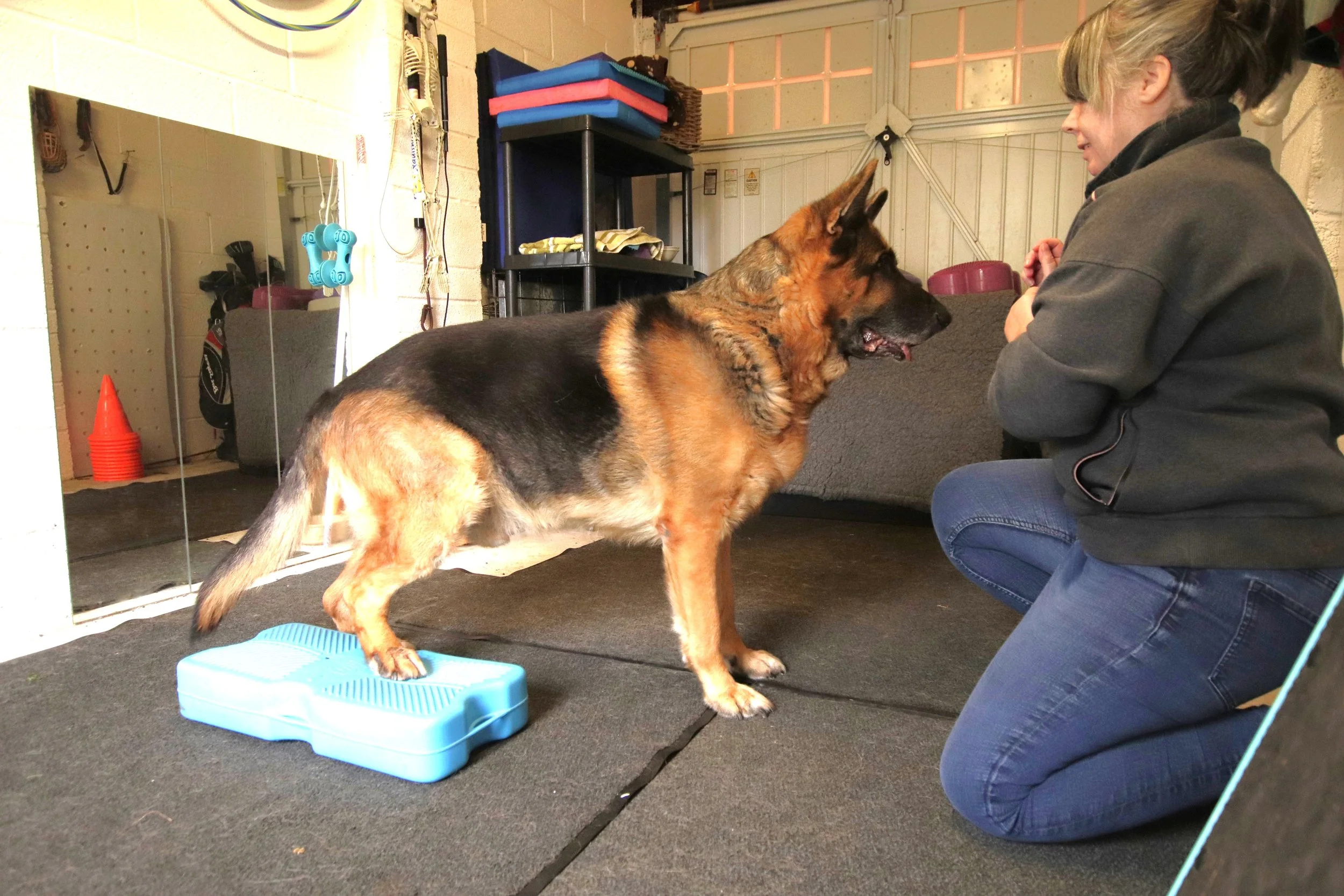
gentle strengthening exercises
improving movement quality and coordination
adapting daily routines and environments
reducing compensatory movement patterns
helping owners recognise fatigue and discomfort signals
The aim is not rehabilitation, but supporting long-term mobility and comfort alongside your vet’s management plan.
Who this service is for
This service may be suitable for:
dogs diagnosed with osteoarthritis
senior dogs experiencing age-related joint changes
dogs with previous orthopaedic injuries who now have arthritis
owners who want structured guidance to support long-term joint health
If your dog is showing new or worsening lameness, veterinary assessment is recommended before beginning conditioning.
“Tracey is incredible. She has been integral to getting the help my girl needed to be pain free and living a very happy life. I would not hesitate to take any of my dogs to see her.”

Step 1: Initial consultation
This includes:
review of your dog’s veterinary history and current management
observation of posture, movement and daily challenges
discussion of your dog’s routine and environment
identification of areas where strength and support can help
simple massage techniques you can use at home to help your dog relax and feel more comfortable (if appropriate)
You will receive:
a personalised conditioning plan
exercise guidance tailored to your dog’s ability
environmental recommendations to improve comfort at home
a personalised online folder with photos/videos that can be shared with your vet if needed
Step 2: Ongoing support
Many arthritic dogs benefit from regular, gentle strengthening and monitoring over time.
Follow-up sessions help to:
adjust exercises as your dog’s needs change
maintain muscle support around affected joints
adapt routines as arthritis progresses
support owners in recognising changes early
Starter programme – includes 3 sessions – £195
Foundation programme - includes 5 sessions – £300
Long-term support programme - includes 8 sessions – £440
All programmes include personalised exercise plans, printed guidance packs, progress tracking and access to your dog’s online support folder. Arthritis support programmes also include guidance on gentle massage techniques owners can use at home.
Please email me at hello@shapingdogs.com if you’d like to book a programme.
A different kind of support
Osteoarthritis is one of the most common causes of chronic pain in dogs, particularly as they age. With the right support, many dogs can remain active and comfortable for years. My role is to help owners implement safe strengthening and mobility strategies that complement veterinary care.
Veterinary Collaboration
Arthritis is a medical condition and should always be managed under veterinary care.
Before starting an arthritis support programme, your dog must have been examined by a veterinary surgeon and be under ongoing veterinary management for their condition.
Where appropriate, I will contact your vet to confirm they are happy for your dog to begin structured conditioning within their current activity recommendations.
Frequently asked questions
-
No. This service focuses on structured, movement-led strengthening and joint support rather than manual therapy or rehabilitation techniques.
I assess posture, weight distribution and functional movement to design a personalised exercise plan. This approach complements veterinary care and can sit alongside physiotherapy if your dog is receiving it.
-
Yes. Recovery-phase conditioning is provided for dogs who have already been examined by a veterinary surgeon. I will contact your vet to confirm consent before beginning structured support.
This service does not diagnose or treat medical conditions. If I have any concerns during assessment, I may recommend veterinary review.
-
Yes, provided your dog is stable and under veterinary care where appropriate.
Targeted, low-impact strengthening can help support joint stability, improve coordination and maintain confidence in dogs with joint changes. Exercises are carefully selected and progressed at an appropriate pace.
-
Older dogs often benefit significantly from structured mobility support.
Ageing naturally affects muscle mass, balance and coordination. Controlled strengthening can help maintain stability and protect vulnerable joints.
-
The session includes:
Observation of posture and weight distribution
Assessment of functional movements (such as sit-to-stand and turning)
Discussion of your dog’s lifestyle and environment
Demonstration of tailored strengthening exercises
You will leave with a personalised mobility and joint support plan.
-
No. This is a movement-led approach.
Careful observation of how your dog loads and moves provides valuable insight without the need for manual manipulation.
-
General exercise maintains fitness. Targeted strengthening supports specific muscle groups that protect and stabilise joints.
This work is controlled, low-impact and progressive — closer in principle to Pilates than high-intensity fitness.
-
Every dog is different.
Some owners notice improvements in confidence or movement quality within a few weeks. The focus, however, is long-term support rather than quick fixes.
Consistency is key.
-
That is absolutely fine. This approach does not rely on manual handling.
In fact, dogs who are touch-sensitive often respond well to structured movement work.
-
Yes. Joint and mobility support is not only for seniors.
Younger dogs with early joint changes, previous injury (with vet clearance), or subtle instability can benefit from proactive strengthening.
-
The initial session includes your personalised plan.
Some owners choose occasional follow-ups to progress exercises and refine technique. Others feel confident continuing independently.
Ongoing support is available but not required.
-
This service is designed for owners who are happy to implement a structured plan at home.
Strengthening and mobility support require consistency and gradual progression.
If you’re looking for a one-off solution without ongoing input, this may not be the right fit.